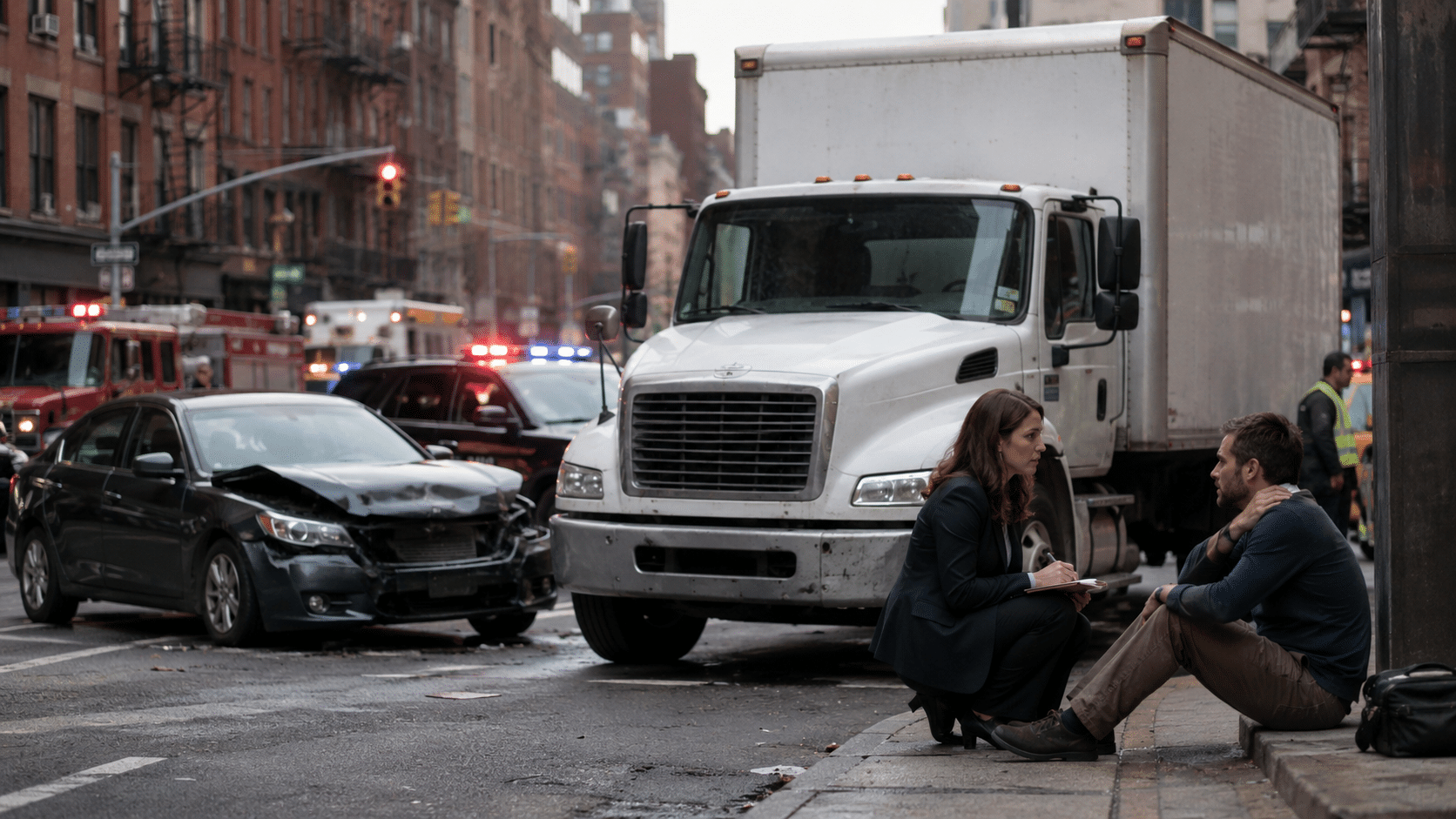
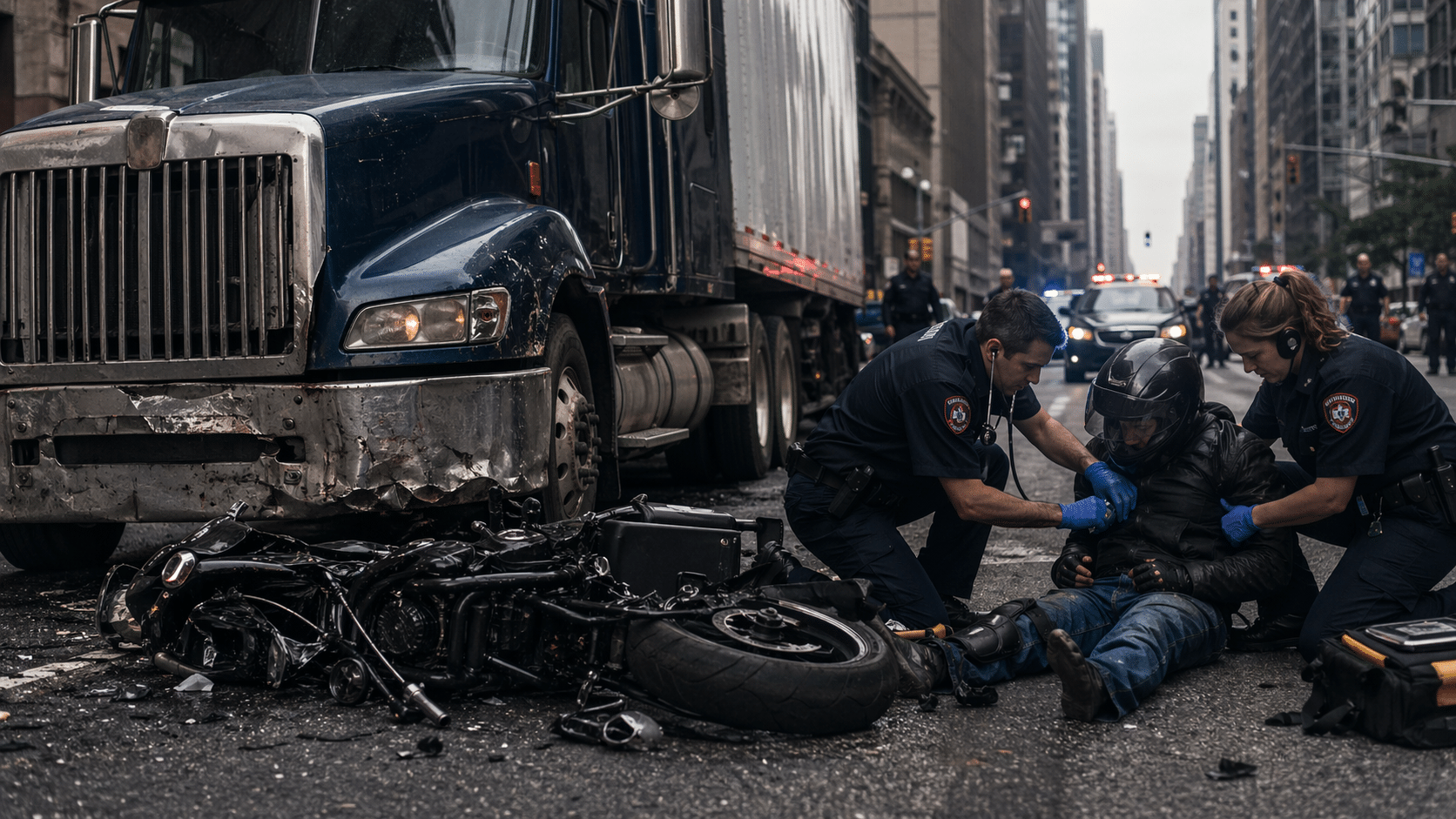
Truck vs. motorcycle accidents in New York are often especially serious because motorcycles offer far less physical protection than passenger vehicles, while commercial trucks bring far greater size, weight, and stopping distance into the crash. That combination can turn even a momentary mistake into a catastrophic injury case with major medical costs, long-term disability, and complex liability questions.
Table of Contents
We return our clients’ phone calls. We are available 24/7, 365 days a year. I give out my personal cell phone number to all my clients, and I tell them they can feel free to contact me at any time. That’s what makes us different.
—Mitchell Proner
Why These Crashes Are So Dangerous
The most obvious reason is the mismatch in force. A motorcyclist does not have the protective frame, seat belt systems, or other occupant protections that passenger vehicles provide. Federal safety sources repeatedly note that motorcycles leave riders more exposed in a collision, which is one reason motorcycle injuries are often so severe. In New York, even the use of approved helmets and eye protection is treated as basic safety equipment because the risk of serious injury in a crash is so high.
When the other vehicle is a commercial truck, the danger increases. Trucks are heavier, need more distance to slow down, and may create visibility problems around blind spots and lane changes. In real-world litigation, that often means truck vs. motorcycle collisions lead to crushed limbs, traumatic brain injuries, spinal trauma, internal injuries, multiple surgeries, and extended rehabilitation rather than the more limited injuries seen in lower-impact crashes. That is exactly why these claims are often high-stakes from the beginning.
Why Liability Is Often More Complicated
A truck vs. motorcycle crash is rarely just a simple “one driver hit another” case. In many truck crashes, the investigation may extend beyond the driver and into the trucking company’s safety practices, the vehicle’s maintenance history, cargo loading, and compliance with federal regulations. FMCSA rules address hours-of-service logging, cargo securement, and inspection and maintenance requirements, which means there may be several layers of evidence and potentially more than one responsible party depending on the facts.
For example, FMCSA explains that electronic logging devices automatically record driving time and other duty-status information by synchronizing with the engine. Cargo securement rules are designed to prevent freight from shifting or falling, and commercial vehicles must also undergo periodic inspections, with maintenance and repair records retained. When a crash happens, those records can help show whether fatigue, overloaded schedules, unsafe cargo, brake issues, or poor maintenance played a role.
With 30 years of experience winning top settlements, we know how to deal with insurance companies and the legal system. You’re in the best hands with us.
—Mitchell Proner
Why Motorcycle Claims in New York Are Different
Motorcycle accident claims in New York also stand out for another reason: motorcycles are not included in the state’s no-fault insurance system the way most other motor vehicles are. That matters because an injured rider may be pushed much faster into a liability-based claim for medical losses, lost income, and pain and suffering rather than relying on the same first-party framework many car occupants expect after a crash.
New York also follows comparative fault rules, which means an injured person’s own conduct does not automatically bar recovery, but damages can be reduced in proportion to their share of fault. In truck vs. motorcycle cases, insurance carriers may try to use that aggressively by arguing the rider was speeding, lane-splitting, hard to see, or otherwise partially responsible. That is one reason these cases must be built carefully and early
What Evidence Can Make or Break the Case
In a serious truck and motorcycle accident case, evidence matters immediately. Key proof may include the police report, scene photos, witness statements, surveillance or dashcam footage, medical records, trucking company records, electronic logging data, inspection documents, and cargo-related documents. Because federal trucking rules require specific recordkeeping, fast legal action can be critical to identify what exists and preserve it before it is lost, overwritten, or disputed.
The damages side is also bigger than many people realize. These claims often involve not only emergency care and current treatment, but also future surgery, rehabilitation, lost earning capacity, long-term pain, and major life disruption. In catastrophic motorcycle injury cases, the value of the claim often depends on proving the full long-term cost of the harm, not just the first hospital bill.
What Injured Riders Should Do After the Crash
After a truck vs. motorcycle collision in New York, getting medical attention should come first. From there, preserving evidence becomes critical: report the crash, photograph injuries and vehicles if possible, avoid detailed statements to insurance adjusters before understanding the case, and speak with counsel quickly if the injuries are serious. In high-value cases, delays can make it harder to secure records and establish exactly how the crash happened.
How a New York Truck and Motorcycle Accident Lawyer Can Help
A lawyer handling these cases can investigate both the crash itself and the trucking side of the case, identify all potentially liable parties, secure regulatory and maintenance evidence, document future damages, and push back when insurers try to shift blame onto the rider. In a case involving severe injuries, that work can make the difference between a limited payout and a claim that reflects the true medical, financial, and human cost of the collision.
Why Early Action Matters
Truck vs. motorcycle accidents in New York are often so serious because they combine extreme physical vulnerability with complex commercial liability. The injuries are frequently devastating, the evidence can be highly technical, and the defense may start building its position immediately. For that reason, these are not cases to treat like an ordinary crash. The sooner the case is evaluated, the better the chance of protecting critical evidence and pursuing the full compensation the injured rider may be entitled to seek.
FAQ
Yes, although it may affect the compensation amount. Speak with a lawyer to evaluate your specific case.
New York follows a “comparative negligence” rule, meaning you can still receive compensation even if you were partly responsible.
In New York, you generally have up to 3 years to file a personal injury claim. The sooner you act, the better your chances of success.